Will the Burnham government revisit the English play strategy?
Does Andy Burnham’s coronation as Prime Minister present the best opportunity in 16 years for play policy in England?
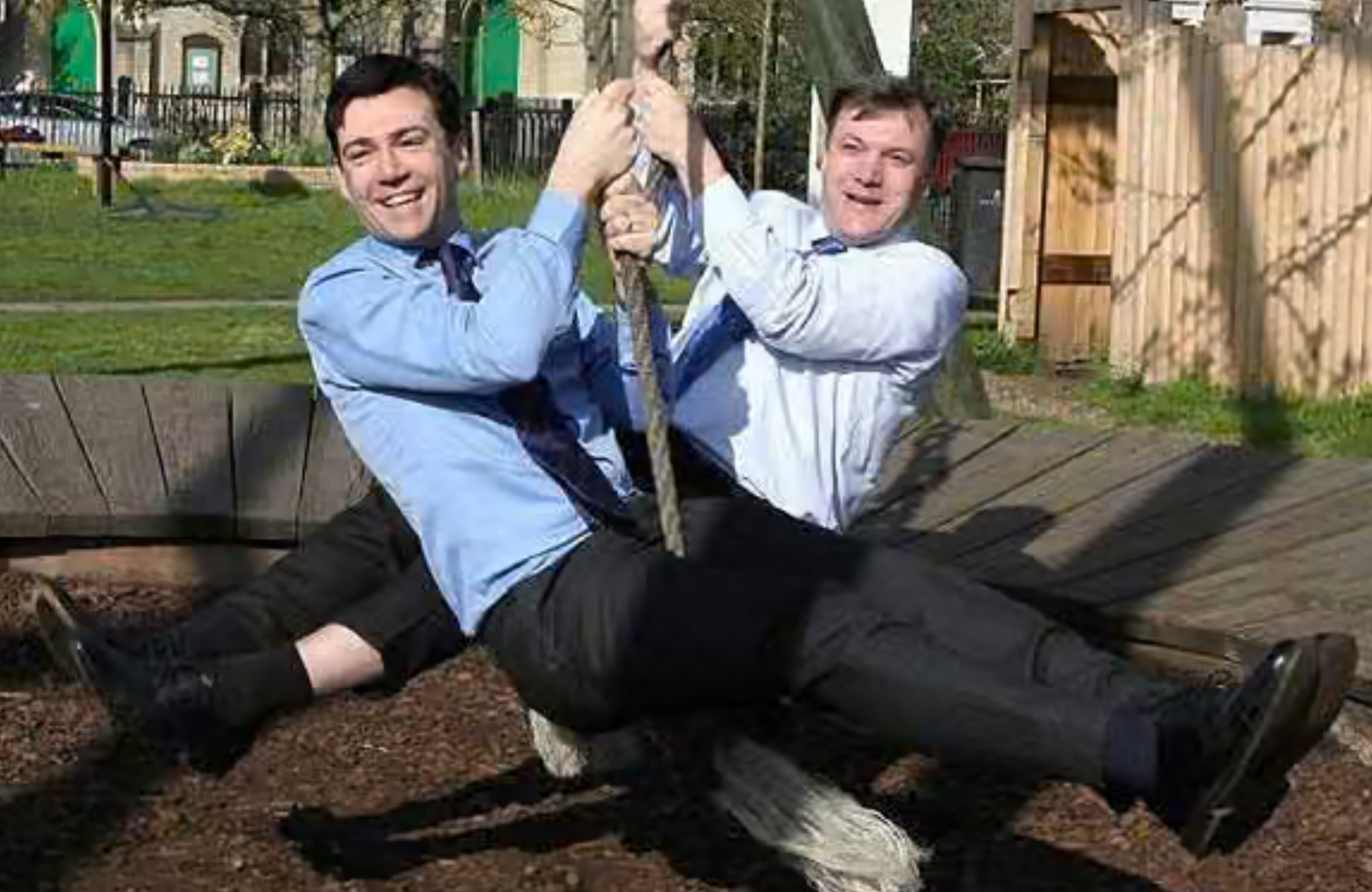
When Andy Burnham, then a junior minister in the Department for Culture, Media and Sport, joined his similarly youthful colleague, the Children’s Secretary, Ed Balls at an adventure playground in south London in the Spring of 2008, it was the culmination of many years of persistent advocacy by the play movement in England. After a long campaign, and via a National Lottery play initiative in 2006, the government had finally conceded to the play movement’s long-term proposals and announced a national Play Strategy, underpinned by £235m of new funding as part of its new Children’s Plan.
The 10-year strategy was to make England ‘the best place in the world to grow up’ by making sure that ‘every residential area had a variety of supervised and unsupervised places to play, free of charge’ and that ‘local neighbourhoods were safe and interesting places to play’ for children. The funding was for 3000 new play areas, 30 staffed adventure playgrounds and a new graduate class of playwork managers. In the longer-term, the strategy contained a bold but serious commitment to embed play provision within the joint planning and commissioning processes for local government. This would secure the mainstream public funding that the play sector had never before been able to rely upon.
New Labour had always made children a priority and these reforms were seen as a key to the government’s vision of joined up children’s services and a planning framework that put families first; the organisational and legislative changes that would make its flagship Every Child Matters (ECM) policy a reality. Children’s advocates had long argued that play should be a more integral part of ECM, which had first been launched in 2003. Now, with Prime Minister Gordon Brown’s key ally, Ed Balls transforming the Department for Education and Skills into the Department for Children, Schools and Families a major national play strategy was here.
Also happening in 2008, of course, was a contagious financial crisis that that would soon bring down the Brown government and usher in a period of austerity that included the deepest cuts in public spending since the Second World War. The Play Strategy was one of the first of many policies and initiatives to be scrapped by the new Conservative-led coalition in 2010; and while most of the initial 3-year funding had already been spent, the longer term-plans to ensure sustainable support for play – by making it an integral part of local plans and strategies – had barely begun, the guidance to local authorities for this long-term planning, having been published only weeks before the change of government in 2010.
The UN Committee on the Rights of the Child has been one of many commentators on the effect of the Play Strategy’s abandonment. Suffice to say that a period of rapid growth in play opportunities was followed by a long and steep decline, only exacerbated by the disproportionate impact of the Covid-19 pandemic and its lockdowns, on children and young people.
16-years after the tidal wave of cuts and cancellations that hit the public and voluntary sectors in 2010 – a prelude to the relentless assault on public services throughout the decade that followed – the slogan of the Burnham government is ‘Hope Again’. This early into what is essentially a government restart, it is no surprise that children’s play has not featured yet in the list of policy aims – a bold agenda by according to many commentators – that Burnham has set out before his party and the country.
Yet, the play movement has not been idle since 2010, slowly but surely regrouping . This includes an All Party Parliamentary Group on Play chaired by Tom Hayes MP, an independent Play Commission jointly led by the former Children’s Commissioner Dame Anne Longfield and the entrepreneur and philanthropist, Paul Lindley OBE. Play England, still with hugely diminished resources compared to its 2000s heyday, has nevertheless been nimble and strategic in growing the evidence base and building the kind of alliance that the government, ultimately, might listen to.
The Prime Minister’s speech to the Labour Party conference yesterday was dominated by his plans for social care, the cost of living, Europe, and the electoral system. It contained only hints of his approach to child policy, but these at least suggest that he is fully aware of what was thrown away in 2010: “kids can’t have a good start in life … youth services practically abolished”.
The Brown Government of 2007-10, which produced the Play Strategy, made children’s overall wellbeing – not just ‘education, education, education’ – its flagship domestic policy. Andy Burnham was a key member of that government, who at the very least will recall the excitement and optimism that accompanied his memorable turn on the ‘American swing ‘ at a London adventure playground 16 years ago.
The play movement in England may not get a better opportunity than this to persuade the government to finish what it started in 2008.
Adrian Voce
Adrian’s book about the 2008 Play Strategy for England, Policy for Play, can be ordered here.